

Home / History & Culture / Founding Story
Founding Story
I didn’t start out wanting to be in this industry.
I just want to do it in a way that earns respect.
Industry Exploration& Foundation
Industry Exploration& Foundation
Many people know me and call me “ Mr Chen .”
After hearing that name for a long time, it feels like people forget I’m just an ordinary person—someone who walked step by step into this industry and was gradually reshaped by it. I’ve been in the sex doll industry for more than fifteen years now.
Looking back now, the starting point of my journey into this industry actually feels somewhat absurd.
In the spring of 2008, I gathered with a few former colleagues and friends. During the gathering, one of them told us that he had a dream the night before: he opened a shop filled with “fake people.” At that time, in mainland China, there was almost no concept of “realistic dolls,” and the term “experience center” had not yet existed. People simply called them “fake people.” Yet this seemingly unserious idea made me and two friends take it seriously. We felt that although no one in China was doing it yet, there might still be a market. So we quickly formed a team, set up a company, and began searching for manufacturers who could bring this idea to life.
Back then, the industry in mainland China was almost a blank slate. Very few people understood it, and even fewer were doing it. Later, we found a Guangdong company that originally specialized in making clothing mannequins. Together, we studied available information, conducted research, and explored the possibilities step by step. Through this process, we gradually developed some of the earliest life-size TPE adult dolls in mainland China. At that time, they were responsible for production, while we focused on sales.
To be honest, that period was extremely difficult—not because there were no orders, but because the industry itself was not understood. The outside world always viewed it through a biased lens, making promotion extremely hard.
But what truly pushed me forward was not external prejudice, but the product itself.
After spending about two years developing and producing TPE dolls, I gradually became more aware of their limitations—such as odor and the tendency to tear. These were not problems that could be solved simply through marketing language. A product ultimately goes into the hands of users. Only those who actually use it truly know what the experience is like.
It was from that point on that I gradually realized that if we wanted to make this a more long-term and more respectable endeavor, we would need to move toward higher material standards.
Later, we learned that silicone dolls were already being used overseas. Around 2012, we made the decision to start developing our own platinum-cured silicone dolls independently. Those years required massive investment. Samples were almost impossible to find, and imported products were prohibitively expensive after tax, making them difficult to obtain even for research. Still, there was no way but to push forward.
It wasn’t until 2014 that we finally launched our first product. Many people think that successfully launching a product already counts as entrepreneurial success.
But for me, real entrepreneurship didn’t start there.
Brand Establishment
Brand Establishment
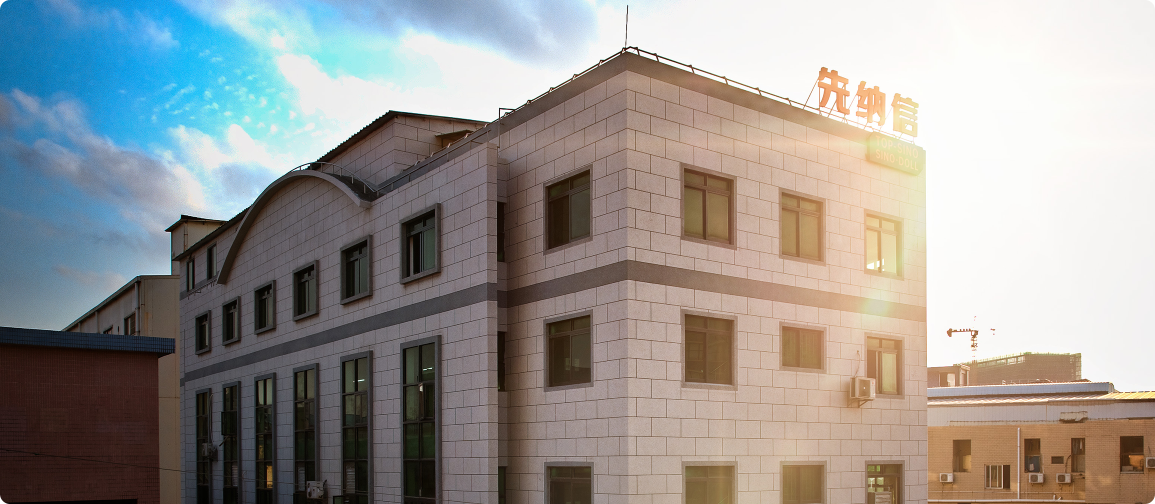
Before the 2018 Lunar New Year, the differences between us as partners in values, long-term direction, and product aesthetics kept widening. Eventually, I made the decision to step away and build something of my own.
That year, I founded Guangdong Sino Environmental Technology Co., Ltd and officially began building both the “XianNaXin” and “Sino-Doll” brands.
Many people only see the two outcomes—“leaving” and “starting my own company”—but the decision in between was far from easy. It wasn’t simply about changing places to keep making money; it was the moment I began to ask myself a deeper question:
What kind of brand do I really want to build?
Because in the end, to stay in an industry for that long, it takes more than judgment alone—it also takes genuine passion.
Over the years, many people have asked me why I stayed in this industry and why I still invest so much time, energy, and cost into something many people don’t understand. To be honest, when I first entered the industry, I couldn’t clearly articulate this feeling—but the longer I worked in it, the more I understood that I truly love this industry.
On the surface, it is product-making. But at its core, it is not just about products—it is about people, aesthetics, touch, and craftsmanship, and about an expression that moves closer to reality first, before ultimately rising beyond it. You must understand materials, structure, faces, bodies, expressions, and what users truly want. It is not about simply producing an object, but about layering imagination, desire, companionship, realism, and aesthetics, until they finally take shape in a tangible, finished work.
The complexity, the difficulty, and the constant possibility of pushing higher and breaking new ground have kept me in a state of both respect and passion for this industry. Others may see it as a niche industry, but I see a world where technology, aesthetics, experience, and an understanding of human nature are deeply woven together.
Because of that passion, I don’t want to approach it casually, I don’t want to compromise, and I don’t want to treat it as just a business.
I used to work in sales at well-known joint venture and foreign-funded companies, including a Japanese-Chinese daily chemical company and a multinational confectionery company. Later, I started my own businesses, selling vintage collectibles, figures, and also building my own candy brand
These experiences taught me one thing: a product’s real long-term potential is not just about sales, but about whether people will remember it, recognize it, and choose to stay with it over time.
So from the very beginning, Sino-doll was never meant to be just a conventional manufacturing company. What I wanted was never simply to produce dolls.
I have always believed that although this industry is special, it still deserves to be treated with seriousness—in its design, its manufacturing, and in every aspect of how it is approached. It should not be a crude consumer product, and even less should it be reduced to something that is only meant to function.
A truly good product must combine realism, aesthetics, craftsmanship, functional experience, detail, and warmth. Simply put, it should not just feel like an object, but like a creation with human form and presence. In the end, this industry is not defined by boldness, but by a deeper understanding of realism and craftsmanship.
Our company has consistently emphasized that Sino-doll’s long-term direction is to build high-end adult products through original design, licensing integration, surface craftsmanship, structural manufacturing, functional development, and aesthetic expression.
Aesthetic Evolution
Craft & Technology Evolution
But in reality, our early products were not very good-looking. I have to admit that one of the biggest challenges in the early days was improving the aesthetics. To put it bluntly, the aesthetics of our early products were far from what I truly wanted.
At that time, there were many voices from outside—some were not optimistic, some were skeptical, some were mocking, and some even went so far as to say that our head sculpts were not good enough and that we should stop trying and just sell bodies instead. But I am exactly the kind of person who cannot stand being told “you can’t do it.”
My approach has always been simple: if you tell me what’s wrong, I fix it; once it reaches your standard, I keep improving it. I am not afraid of external criticism or rejection; what I fear is knowing there is a problem and choosing to ignore it. Looking back on the journey so far, the phrase I have said most often is “never forget why I started.” Do your work well, stay true to your original intention, and strengthen yourself first—eventually, the product itself will answer everything.
Over the years, many of Sino-doll’s most important achievements have been built up little by little through continuous refinement—such as head sculpts.
I believe head sculpting is not just about assembling facial features. The real challenge lies in expression and temperament—whether it feels natural at first glance, whether it holds up over time, and whether it carries a sense of “human presence.”
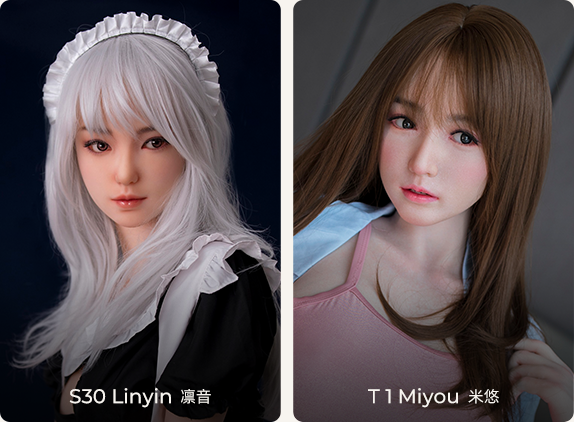
Later, Sino-doll reached key milestones, including S30 Linyin and T 1 Miyou.
Especially “Miyou,” which was not something I created alone behind closed doors, but the result of more than three months of back-and-forth discussions and repeated revisions with experienced users, even leading to the scrapping of two molds before it was finally completed.
Why did I do this?
Because I have come to increasingly believe that products cannot be built behind closed doors. You need to listen to users’ real feedback on aesthetics, proportions, expressions, and temperament, and then translate it back into product thinking.
Craft & Technology Evolution
Aesthetic Evolution
Later, Sino-doll gradually began to take shape as something with its own character.
From RS to RRS to RRS+, then to 3D dynamic muscle texture painting and Recreated Pore Skin Texture Technology , each step was not a leap forward, but an accumulation built layer upon layer. Our company wall displays this technical evolution—from RS painting all the way to Recreated Pore Skin Texture Technology—representing a continuous push toward greater realism, detail, and refinement.
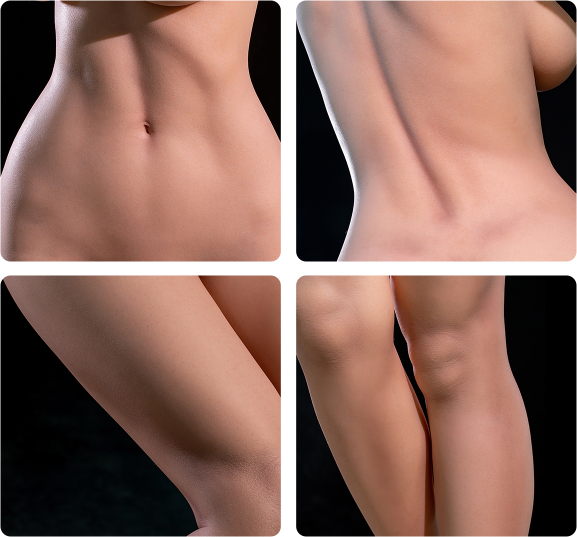
Recreated Pore Skin Texture Technology may look like simply “finer skin,” but in reality it involves a highly complex set of technical processes. It is not simply about molding, but about combining molding, modeling, and sculpting techniques to achieve a youthful, delicate, and vibrant skin feel.The full-body skin texture alone took us three years to develop, with extremely high R&D costs and time investment.
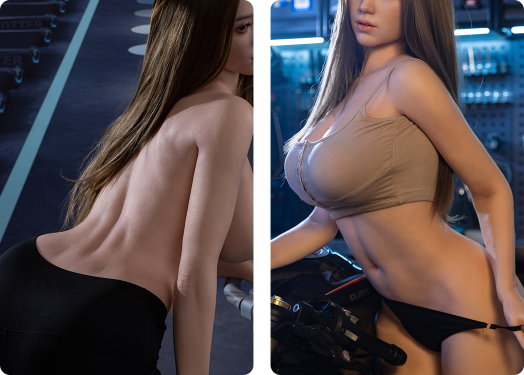
There is also Artist Makeup.
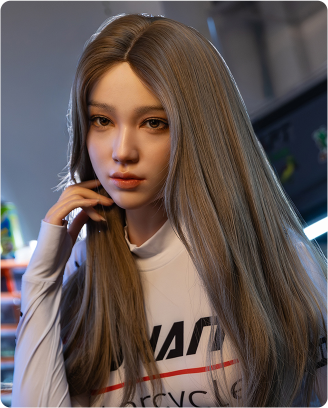
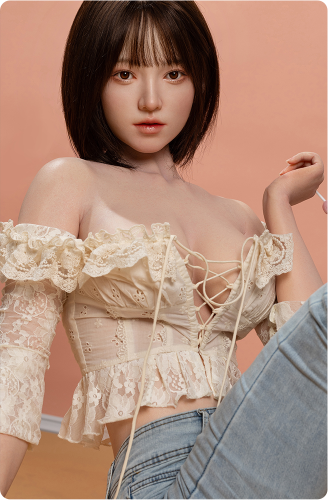
Many people initially did not understand why makeup adds value. But to me, makeup is never an accessory step—it is a process of bringing “life” into being. Sculpting defines the structure; makeup defines the spirit. Whether a product feels alive and interactive is closely tied to this stage. After introducing Artist Makeup, more customers were willing to pay for it, proving that the market ultimately recognizes real value.
In the long run, product development is not about specifications, but about judgment. When to launch, when not to launch, and when to restart—all of these decisions matter.
For example, our small-scale seamless edition product T1230 took two to three years of stop-and-start development. Not because it couldn’t be made, but because I was never satisfied. It never felt harmonious—too rough, too stiff, or too flat depending on adjustments. The balance was extremely difficult. So I preferred to delay release rather than publish something careless. Only when it felt right did we launch it.
People see continuous product launches, but only we know how many times things were rebuilt from scratch.
Cultural Expression
Cultural Expression
Over the years, Sino-doll has gradually become more than just a brand focused purely on sales. I increasingly want to integrate our understanding of “characters” and culture into our products.
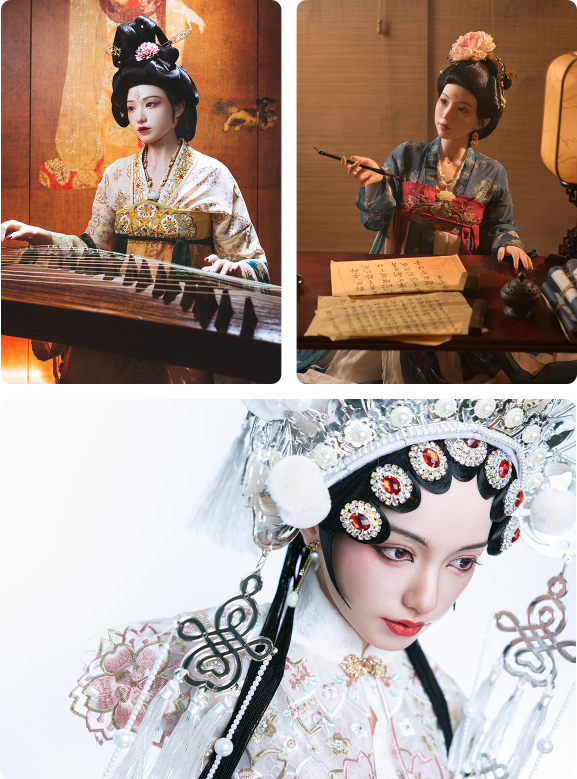
So we later collaborated with a design company to create a soft-body wax museum. Some visitors find it surprising, even something that doesn’t feel like what a typical business would do. But to me, it is not a gimmick—it is an expression. Traditional rigid wax museums aim for likeness. What I want is a soft-body wax museum—not only likeness, but also warmth, touchability, poseability, and above all, beauty.
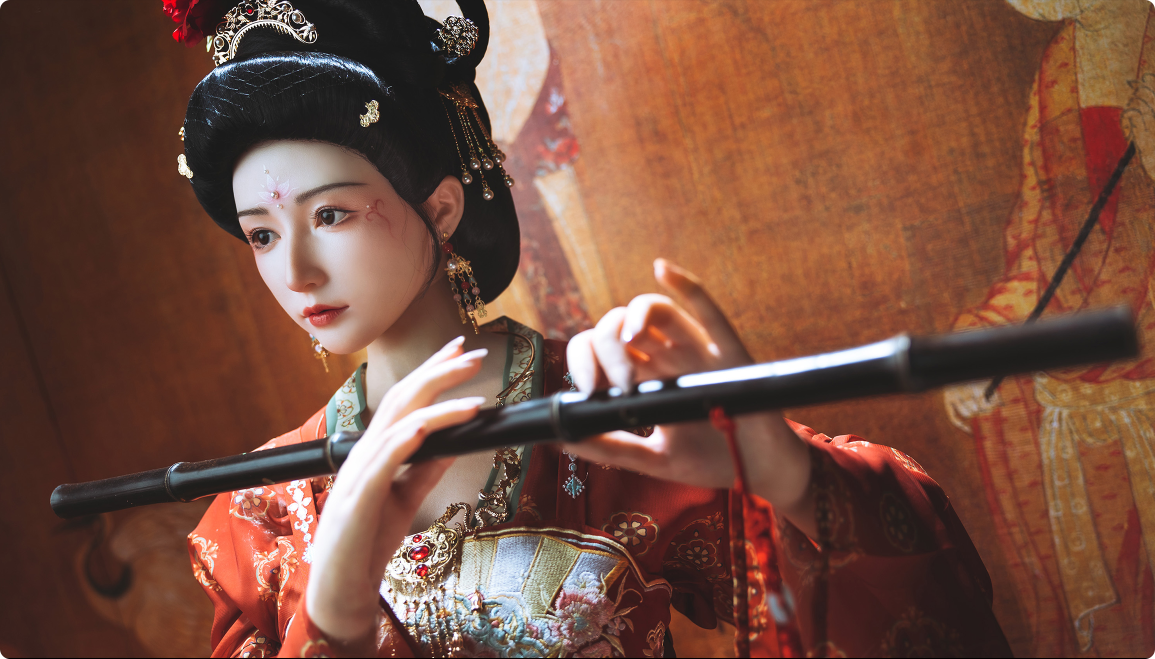
I want people to see that Sino-doll is not just making adult products—we have always been working to give them a higher level of character-based design. This also comes from a personal sense of sentiment.
I also care deeply about cultural expression. We incorporated traditional Chinese aesthetics—classical-style settings, guqin, chess, calligraphy, and painting—into our exhibition space, not just for visual appeal, but to show that China is also capable of blending figurative work with culture in a way that feels rich and layered. Many visitors described the exhibition as having a strong sense of cultural expression, almost like being transported back to the Tang Dynasty.
Brand Philosophy
Future Direction
Of course, the journey has not been without turbulence.
Over the years, I have faced contempt, skepticism, defamation, and even online attacks. But I believe a brand’s survival is not determined by online noise, but by real long-term users. Some people ask me why I can still persist after seven years. I say: do it well, stay true to the original intention. Only when you are strong enough will some envy you, and others choose to follow you.
What really moved me is that some customers truly treat Sino-doll products as works. I have a client in Shanghai who has, for years, spent almost every weekend doing outdoor shoots with carefully styled Sino-doll products—even in the intense heat of midsummer. To me, this speaks louder than any sales figure. It proves our creations are not just purchased—they become part of people’s lives, aesthetics, and creative expression.
The name XianNaXin(Sino-doll) has always been very meaningful to me.
- “Xian” stands for putting quality first
- “Na” represents openness and inclusiveness;
- “Xin” stands for keeping promises.
This is not a slogan, but a reminder I constantly give myself.
Future Direction
Future Direction
Today, I no longer see myself as just someone who “makes dolls.” I prefer to see myself as someone who has long been focused on realism and character expression.
In the future, Sino-doll will continue to focus on high-end adult products, but I am increasingly aware that what we have accumulated over the years—our understanding of materials, hyper-realistic sculpting capabilities, and precision manufacturing expertise—should not be limited to this field.
We are already expanding these capabilities into broader fields, from embodied robotics appearance design to ultra-realistic facial systems and synthetic skin technologies. Related internal documentation also shows that from the second half of 2025, we have begun actively expanding into these areas.
Because I believe that no matter how product forms evolve, two things will always remain truly scarce:
First, a sense of realism that people are willing to get close to;
Second, a level of refinement that people are willing to believe in.
I didn’t start out wanting to be in this industry. But once I entered it, I refused to treat it casually. I wanted to do it in a way that earns respect. I’ve walked this path for fifteen years. There have been many difficulties and misunderstandings, but even today, I still believe stepping into this industry was the right decision.
Because what I create has never been just a product.
It is something that keeps moving closer to realism, and closer to my own standards.